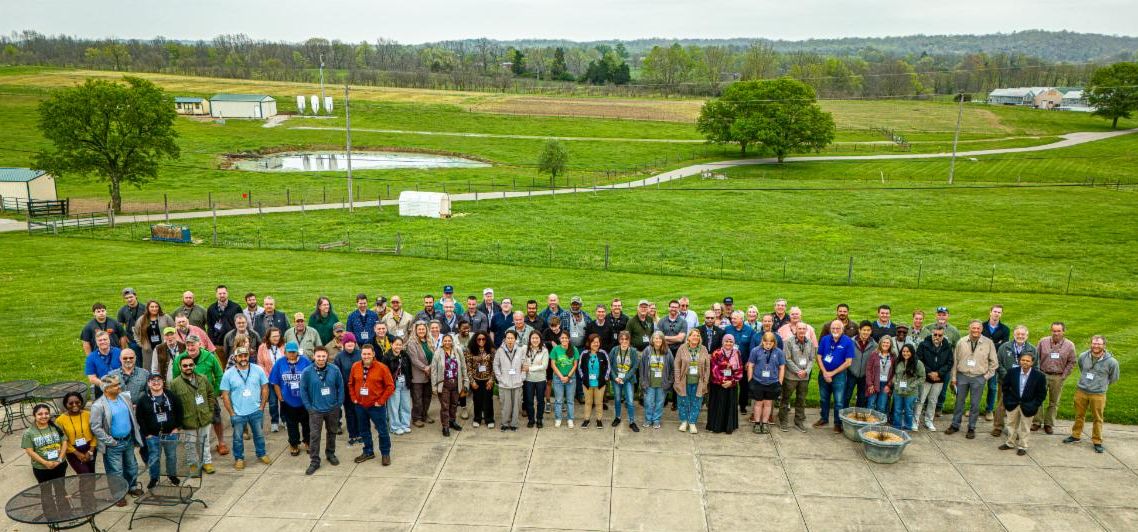
The two-day event in Frankfort linked Ä¢¹½ÊÓƵ research with the growing commercial
promise of inland shrimp production.
FRANKFORT, Ky. — Shrimp remains America’s most-consumed seafood, and rising demand
is sharpening interest in domestic production. That momentum brought global aquaculture
leaders to Ä¢¹½ÊÓƵ this month for the 2026 Shrimp Farming Symposium,
hosted by the School of Aquaculture and Aquatic Science at the Harold R. Benson Research
and Demonstration Farm.
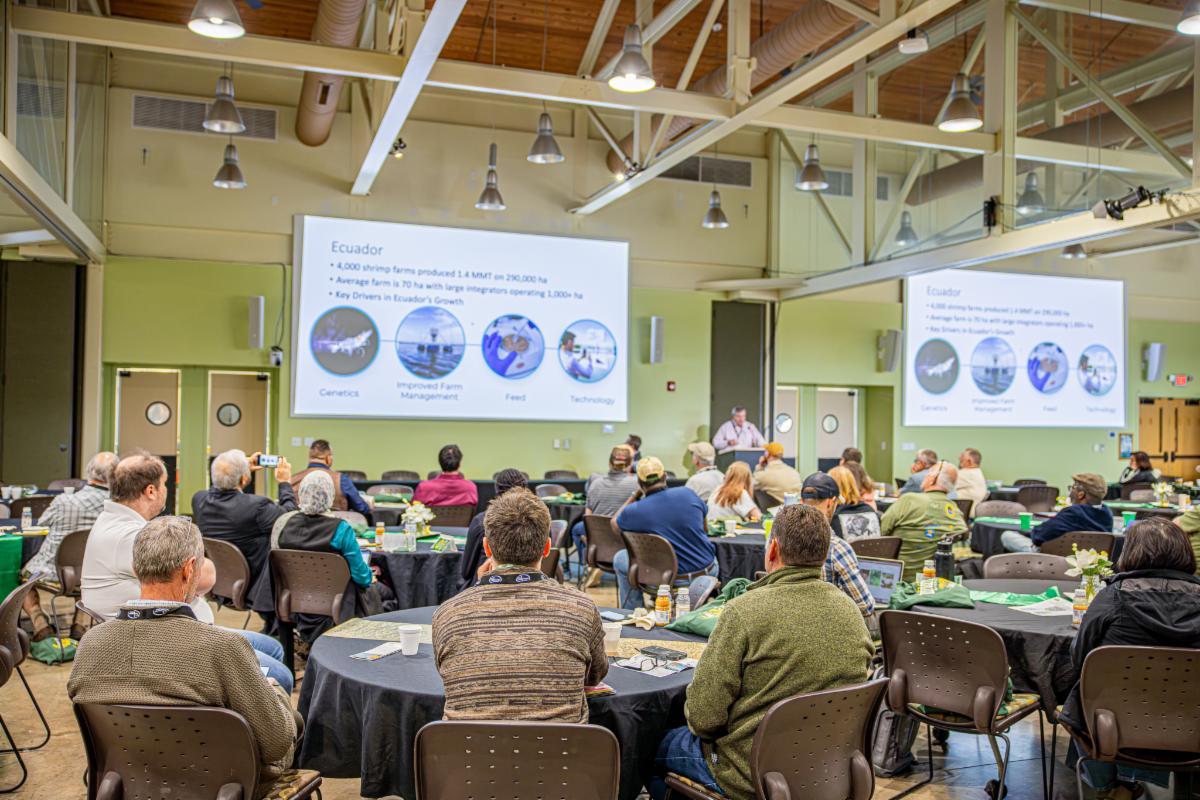 More than 160 people attended in person from 19 states and five countries, with 22
others joining virtually. Researchers, commercial producers, entrepreneurs, students,
and industry representatives spent two days examining the science, systems, and market
realities shaping shrimp production far from the coast and the growing role inland
aquaculture can play in food security.
More than 160 people attended in person from 19 states and five countries, with 22
others joining virtually. Researchers, commercial producers, entrepreneurs, students,
and industry representatives spent two days examining the science, systems, and market
realities shaping shrimp production far from the coast and the growing role inland
aquaculture can play in food security.
In addition to sessions at the Benson Farm, attendees toured the Aquatic Research
Center for a closer look at Ä¢¹½ÊÓƵ’s work in practice.
Kentucky’s only dedicated research complex of its kind, the Aquatic Research Center
includes 33 research ponds, a 3,000-square-foot hatchery, a 3,500-square-foot nutrition
laboratory, a 14,000-square-foot production technologies building, and specialized
facilities that support year-round environmental research and student learning.
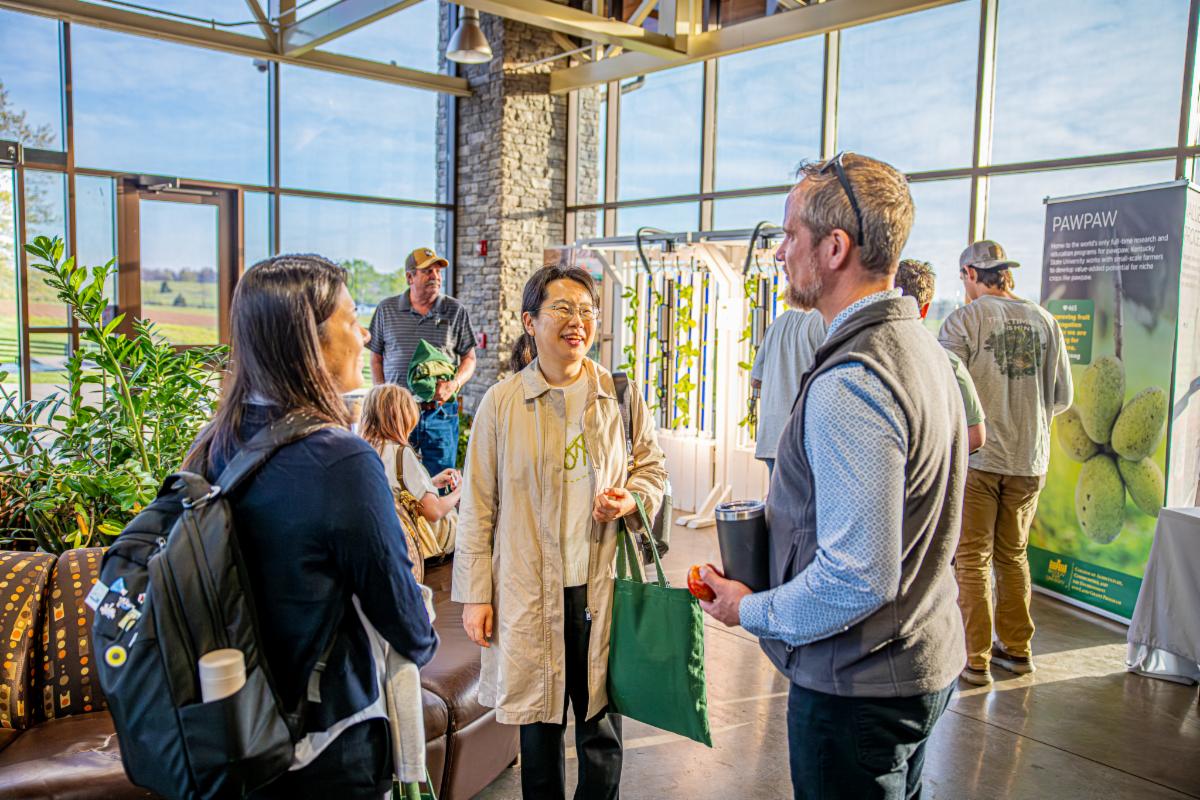 The visit brought participants directly into the setting where Dr. Andrew Ray and
his colleagues have helped advance intensive recirculating aquaculture systems as
a viable model for inland shrimp production. Dr. Ray presented research showing those
systems reaching production levels above 15 kilograms per square meter.
The visit brought participants directly into the setting where Dr. Andrew Ray and
his colleagues have helped advance intensive recirculating aquaculture systems as
a viable model for inland shrimp production. Dr. Ray presented research showing those
systems reaching production levels above 15 kilograms per square meter.
Speakers such as Khalid Al-Naif of Black Iris Farms in Michigan and Andre Faul of
Faul Family Riverside Farm in Kentucky brought the commercial side of that conversation,
showing how indoor shrimp farming is moving from research settings into working businesses
shaped, in different ways, by systems and practices advanced at Ä¢¹½ÊÓƵ.
The speaker lineup reflected the symposium’s international reach and practical focus.
It included George Chamberlain of the Center for Responsible Seafood, Dr. Craig Browdy
of SyAqua Group, Robins McIntosh Vice President of Charoen Pokphand Foods Public Company
in Thailand, Dr. Bert Wecker of Ocean Loop in Germany, Dr. Arun Dhar of the University
of Arizona, Dr. Waldemar Rossi of Ä¢¹½ÊÓƵ, and other specialists
in shrimp health, nutrition, genetics, production systems, and emerging technologies.

Sessions covered global trends, biosecure production, hatchery development, niche-market
economics, artificial intelligence, and carbon-reduction strategies in recirculating
aquaculture systems. The symposium also created space for the kind of direct exchange
attendees said they valued most — hearing from researchers, producers, hatcheries,
and equipment suppliers in one setting while building relationships across the industry.
While the symposium underscored Ä¢¹½ÊÓƵ’s national prominence and
growing international reach in aquatic science, that standing is also being strengthened
by the University’s new Bachelor of Science in Aquatic Science, offered through the
School of Aquaculture and Aquatic Science, Ä¢¹½ÊÓƵ’s only Program of Distinction
as designated by the Kentucky Council on Postsecondary Education.
The degree is designed to prepare graduates for careers connecting water, food systems,
and environmental stewardship. Coursework will span aquatic ecology, limnology, water
chemistry, aquaculture systems, marine biology, and fisheries science, with hands-on
learning anchored in access to the Aquatic Research Center. Career paths connected
to aquatic science include aquaculturist, hatchery manager, hydrologist, watershed
scientist, fisheries biologist, and water treatment expert.