
Ä¢¹½ÊÓƵ research collaboration explores how dairy manure can produce more renewable
methane
FRANKFORT, Ky. — On a dairy farm, one of the most overlooked energy sources may be
the material most people would rather not think about.
Dairy manure is a waste-management challenge for producers, but it also holds renewable
energy potential. A new collaborative study involving a Ä¢¹½ÊÓƵ
researcher suggests that with the right treatment, farms may be able to capture more
of that value while maintaining the energy efficiency needed for real-world agricultural
operations.
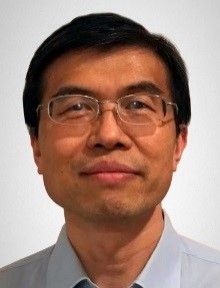 Dr. Liang Yu, assistant professor in the School of Engineering and Technology within
Ä¢¹½ÊÓƵ’s College of Business, Engineering, and Technology, conducted the study
with Washington State University collaborators Ms. Meghana C. Mendon, a doctoral student,
and Dr. Shulin Chen, professor of biological systems engineering and leader of the
Bioprocessing and Bioproduct Engineering Laboratory.
Dr. Liang Yu, assistant professor in the School of Engineering and Technology within
Ä¢¹½ÊÓƵ’s College of Business, Engineering, and Technology, conducted the study
with Washington State University collaborators Ms. Meghana C. Mendon, a doctoral student,
and Dr. Shulin Chen, professor of biological systems engineering and leader of the
Bioprocessing and Bioproduct Engineering Laboratory.
The peer-reviewed study, was recently published online in the journal Fuel.
At the center of the study is anaerobic digestion, a process that may sound complicated
but is rooted in a simple idea. Anaerobic means “without oxygen.� In anaerobic digestion,
microorganisms break down organic material, such as manure, in a sealed environment
where oxygen is not present.
That process produces biogas, an energy-rich gas that contains methane. When captured
and used properly, methane from biogas can become a renewable energy source instead
of being released as waste.
The research examined a three-stage process. Dairy manure first moves through conventional
anaerobic digestion. The remaining fibrous material is then treated with heat and
water through hydrothermal treatment. Finally, the material goes through a second
digestion phase.
Across all tested conditions, the integrated approach increased methane production.
The strongest result came when digestate solids were heated to 180 degrees Celsius
for one hour, producing a 52 percent higher methane yield. The process also improved
the breakdown of tough plant-based fibers and reduced solids.
“Livestock manure presents a major opportunity for renewable energy production when
treated efficiently,� Dr. Yu said. “This study demonstrates that targeted hydrothermal
treatment can unlock more usable energy from agricultural waste while remaining practical
for real-world farm operations.�
One of the study’s key findings is not simply that more methane can be produced, but
that the process can be designed to avoid a major drawback of many pretreatment technologies:
the need for substantial outside energy.
The researchers modeled a closed-loop system that recovers and reuses heat generated
during processing. That configuration allowed the enhanced system to remain thermally
self-sustaining while producing more renewable methane.
For producers, the findings point toward a practical possibility: manure management
systems that reduce waste concerns, strengthen environmental stewardship, and create
additional value through renewable natural gas production.
“This work supports the development of more sustainable agricultural systems,� Dr.
Yu said. “By improving how manure is converted into energy, we can help producers
strengthen both environmental stewardship and economic resilience.�
The research also reflects the kind of applied, solutions-oriented work Ä¢¹½ÊÓƵ
is advancing through Biological and Agricultural Engineering, a new academic program
area offering both undergraduate and graduate degrees through the College of Business,
Engineering, and Technology in partnership with the University’s College of Agriculture,
Health, and Natural Resources.
The program connects engineering, agriculture, biology, and sustainability in ways
that prepare students to address real-world challenges in food systems, environmental
stewardship, renewable energy, water reuse, and agricultural productivity.
Dr. Yu, who serves as assistant professor and graduate coordinator of the Biological
and Agricultural Engineering program, brings more than two decades of multidisciplinary
experience to that work. His research focuses on turning organic waste, including
animal manure and food waste, into useful resources such as renewable natural gas,
nutrient-rich fertilizers, clean water, and other bioproducts.
Through work like Dr. Yu’s, Ä¢¹½ÊÓƵ is connecting faculty research, student
learning, and agricultural innovation in ways that directly support producers, communities,
and the Commonwealth’s future workforce.
For more information about the Biological and Agricultural Engineering program,