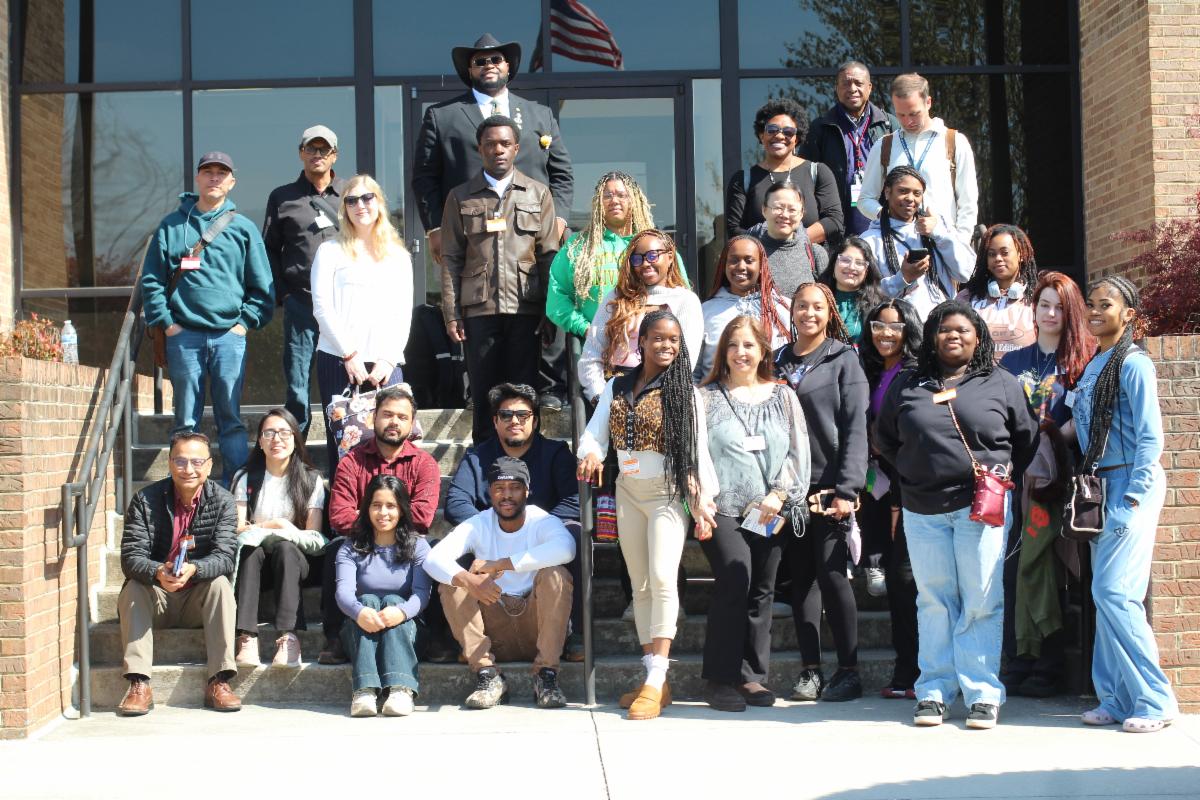
Thirty participants toured national laboratory facilities tied to supercomputing,
neutron science, advanced manufacturing, and transportation innovation
FRANKFORT, Ky. — A recent spring visit to Oak Ridge National Laboratory turned classroom
concepts into a firsthand look at some of the nation’s most advanced scientific research
for Ä¢¹½ÊÓƵ students, faculty, and staff.
Thirty participants traveled to Oak Ridge, Tennessee, March 24-25 for an educational
visit that included facility tours, presentations from scientists, and information
about research, internship, and career pathways. The visit was organized through the
University’s Center for Geospatial Intelligence and Environmental Security Lab, led
by Principal Investigator Dr. Buddhi Gyawali, in collaboration with ORNL’s Office
of Research and Education. Ä¢¹½ÊÓƵ Research Associate Kabita Paudel coordinated
the visit.
 The trip built on Ä¢¹½ÊÓƵ’s growing connection with ORNL. In November 2025,
Dr. Jackson Gainer, student affairs specialist at ORNL, visited Ä¢¹½ÊÓƵ to
meet with students, faculty, and administrators about internships and fellowships
that prepare participants for graduate study and high-demand technical careers.
The trip built on Ä¢¹½ÊÓƵ’s growing connection with ORNL. In November 2025,
Dr. Jackson Gainer, student affairs specialist at ORNL, visited Ä¢¹½ÊÓƵ to
meet with students, faculty, and administrators about internships and fellowships
that prepare participants for graduate study and high-demand technical careers.
At Oak Ridge, participants were introduced to research environments connected to high-performance
computing, materials science, advanced manufacturing, transportation technology, instrumentation,
and other fields shaping the future of science and engineering.
One of the visit’s highlights was a tour of the Frontier supercomputer at the Oak
Ridge Leadership Computing Facility. Participants learned how researchers use large-scale
computing systems to support simulations, data-intensive research, artificial intelligence
applications, climate science, materials discovery, and other work that requires extraordinary
computational capacity.
Zhakeya Hawkins, an undergraduate computer science major, said the experience helped
her better understand the scale and power of advanced computing.
“I made sure to sit in the front row because I wanted to take in as much as I could,�
Hawkins said. “The education and outreach team was outstanding. It was exciting to
learn about Frontier, exascale computing, and how these systems help solve complex
problems so efficiently.�
The group also toured the Spallation Neutron Source, where scientists use neutron
scattering to study materials at the atomic level. Research conducted at the facility
supports advances in energy technology, manufacturing, medicine, national security,
and other disciplines.
Ariana Billings, an undergraduate biology major, said the neutron research tour was
especially memorable.
“My trip to ORNL was very informative,� Billings said. “I especially enjoyed the Spallation
Neutron Source and our tour guide. Learning how neutron scattering is used to study
materials at the atomic level, and hearing about the wide range of samples researchers
have analyzed, was fascinating.�
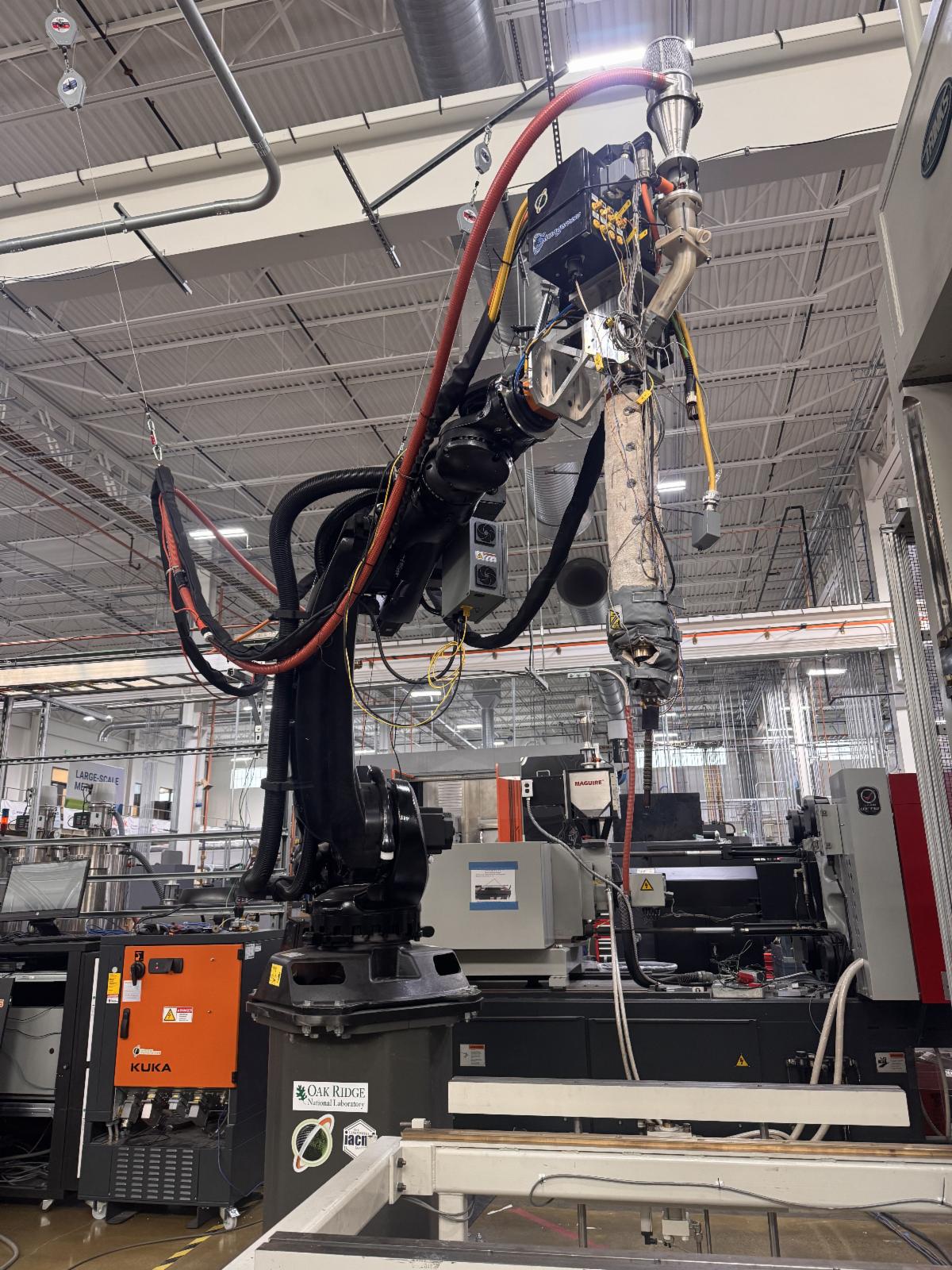 At the Manufacturing Demonstration Facility, participants saw examples of advanced
manufacturing and sustainable materials research. Researchers discussed additive manufacturing,
including large-scale 3D printing technologies, as well as work focused on biodegradable
alternatives to conventional plastic materials.
At the Manufacturing Demonstration Facility, participants saw examples of advanced
manufacturing and sustainable materials research. Researchers discussed additive manufacturing,
including large-scale 3D printing technologies, as well as work focused on biodegradable
alternatives to conventional plastic materials.
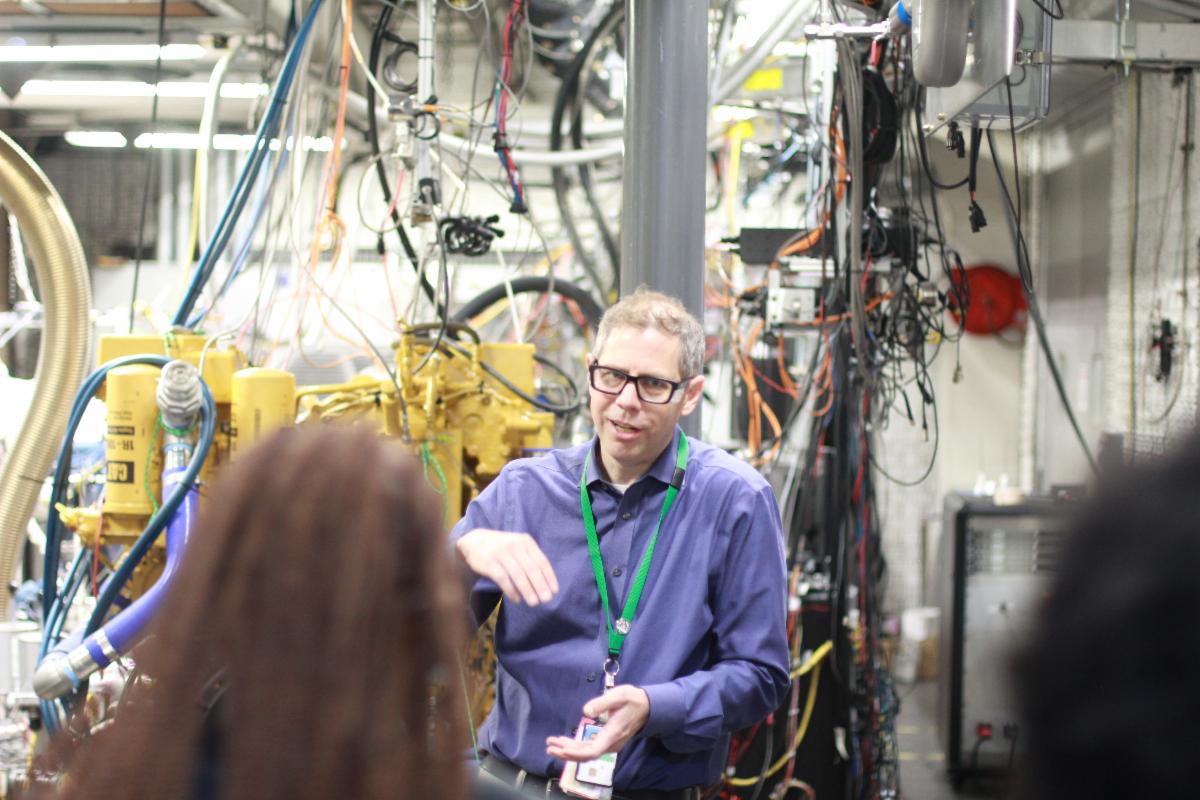
The visit also included the National Transportation Research Center, where participants
were introduced to research related to autonomous vehicles, advanced combustion systems,
and alternative fuels designed to improve transportation efficiency and sustainability.
Malik Thompson, a graduate student in computer science, said the visit helped connect
emerging technologies to real-world research questions.
“This was a very immersive learning experience,� Thompson said. “We were able to see
cutting-edge technology and learn how advanced systems are used not only to create
products, but also to transform the way research is conducted.�
Thompson has been building his own pathway through STEM research and student mentorship.
A Ä¢¹½ÊÓƵ graduate with degrees in mathematics and computer science, he is
pursuing a master’s degree in computer science with a concentration in cybersecurity
and has previously participated in a federal research lab internship focused on large-scale
simulations, computational research, and applied problem-solving.
Faculty and staff said the visit was also valuable because it exposed students to
research pathways beyond the classroom.
Dr. Dharma Khatiwada, assistant professor of physics, said the experience underscored
the importance of connecting students with world-class research facilities.
“My visit to Oak Ridge National Laboratory, particularly the Frontier supercomputer
and the Spallation Neutron Source, was highly informative,� Dr. Khatiwada said. “As
a physics faculty member, I gained valuable insight into the rigorous safety protocols
and quality standards maintained at these facilities. There are also many research
opportunities available for undergraduate students, many of which are supported by
funding.�
Cora Teets, a Ä¢¹½ÊÓƵ staff member in the Urban Agriculture Lab, described
the visit as eye-opening.
“Exposure to world-renowned research facilities at Oak Ridge National Laboratory was
incredibly inspiring,� Teets said. “Our students and faculty learned so much through
engagement with researchers and tours of facilities including the Spallation Neutron
Source, National Transportation Research Center, and Manufacturing Demonstration Facility.�

Dr. Gyawali, professor of geospatial applications and climate studies at Kentucky
State, said experiences such as the ORNL visit help students understand the broader
scope of applied STEM research and its role in addressing environmental, agricultural,
and urban development challenges that affect daily life.
He added that learning opportunities beyond the classroom can motivate students to
pursue internships, explore STEM career pathways, and engage in capstone research
projects during their studies.
ORNL representatives also shared information about educational and career opportunities,
including a Summer 2026 Virtual Hands-On High Performance Computing Crash Course,
undergraduate internships, recent graduate opportunities, graduate research opportunities,
and visiting faculty programs. Participants learned about application processes, timelines,
and ways to connect with potential mentors and research groups.
Undergraduate and recent graduate students are encouraged to explore research opportunities
through ORNL’s .
For Ä¢¹½ÊÓƵ, the experience reflected the University’s commitment to expanding
student access to high-impact learning opportunities in science, technology, engineering,
agriculture, and mathematics. By seeing national laboratory research up close, students
were able to imagine themselves not only learning about advanced science, but contributing
to it.
The visit was supported primarily by the U.S. Department of Energy through the Geospatial
Artificial Intelligence Enhanced Curriculum for Minority Serving Institutions grant,
Award No. DE-EM0005308, with additional support from the National Science Foundation’s
Preparing the Pipeline of Next Generation STEM Professionals project, Award No. HRD
2011917, and the USDA NextGen program, Generating and Sustaining the Next Generation
of the Food, Agriculture, Natural Resources, and Human Sciences Workforce through
International Experiential Learning, Outreach and Engagement, Ä¢¹½ÊÓƵ subaward
No. UMES/NEXTGEN/Kentucky-01-5208630 and USDA Award No. 2023-70440-40145. The Kentucky
State efforts are directed by Dr. Buddhi Gyawali.
For more information about these grants and related opportunities for students and
high school partners, contact Kabita Paudel at kabita.paudel1@kysu.edu or Dr. Buddhi Gyawali at buddhi.gyawali@kysu.edu.